Balance and why it is so important

As a group fitness instructor, avid outdoors woman, and long-distance runner for over a decade, I have tried almost every trick in the book to be better, faster, and stronger. Let’s talk about balance today. Have you ever felt super wobbly or unsure of your footing? Do you struggle to put on your leggings that you plan to just wear around the house? Oh, is that just me? I wear my active wear all the time. There is a YouTube video about people like me doing grocery shopping in my active wear. It is funny, I recommend it. But I am already digressing, please excuse me while I get it together.

Balance doesn’t just apply to tight rope walkers, trail runners, or ice skaters. Everyone, and I mean everyone, should be doing things to improve their balance. As we age, we start to lose that natural balance and are prone to falling more. The older we get, the more likely of broken bones or other injuries.

So, now you know why balance is so important, but how do you improve it? It is actually easier than you think. You don’t need to go do tons of Yoga or tight rope walking. Though, I do recommend Yoga, maybe not the tight rope walking. But there is fairly easy exercise you can do around your house without any equipment to improve your balance.

Remember how I recommend doing calf raises while you brush your teeth? Well, I don’t know that I would do 2 minutes of them twice a day. I would add in some balance too! Do the calves at night and balance in the morning.

Why doing balance in the morning is good: You wake up your core muscles which are a key component to balance. Once those are awake and working they automatically increase your balance. So, here are a few of the balance exercises I started a few years back.

After I tore my lumbar support muscle in my back (stress from my job) I only could do some workouts until it healed. One of those was balance work. It was so important to increase my balance and strengthen my core and booty. My absolute favorite balance work to do is stand with one foot firmly planted on the floor. Don’t be all willy nilly with that foot. Lift your other foot off the ground and hold it there. Squeeze your booty and imagine your belly button pulls into your spine. But don’t hold your breath. Continue to breath. Hold that balance position for 30 seconds and then switch feet. Do this exercise twice on each side. Boom, now you’re done brushing your teeth and you’ve done 2 minutes of balance work.

You can start out with your foot low to the ground if you’re feeling wobbly. Make sure to have a wall or a chair nearby in-case you need some extra support. As you get stronger and more balanced, lift the foot higher until you’re at 90 degrees with your knee.

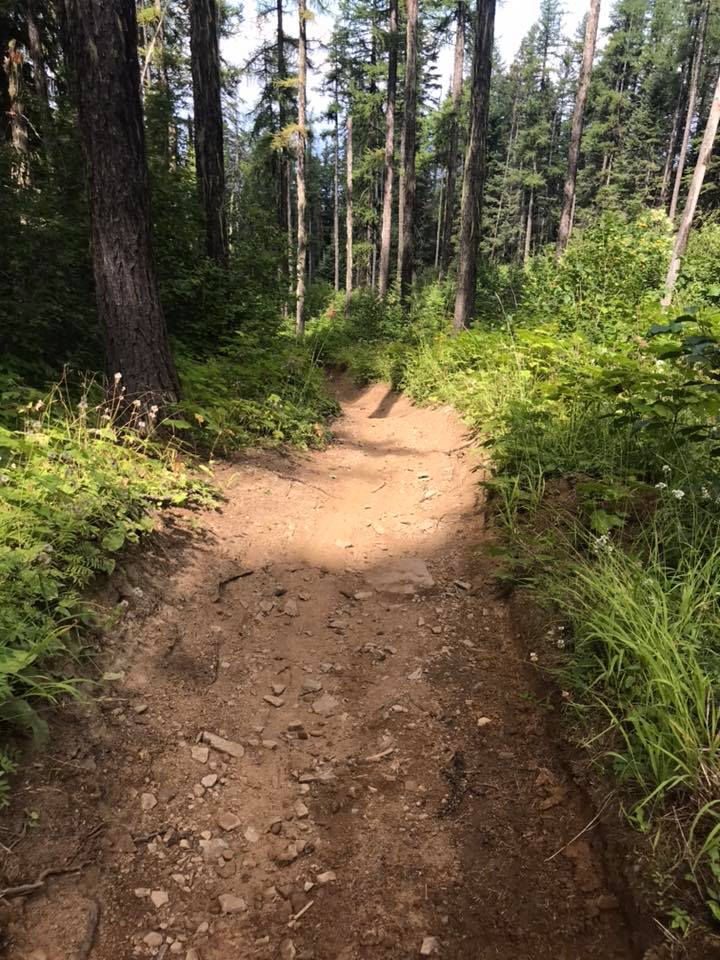
Great, now you’ve mastered that. Try closing your eyes while you do it. Our eyes tell us where our bodies are and what our bodies are doing. So, when you close your eyes you lose those visual cues. Your body has to figure it out without the eye signals. But don’t fret, this can be mastered too. In no time you’ll be bouncing from rock to rock on the trail.

This one is so good for the core, which also includes your back. Start with both feet planted under your hips with your arms up and over your head. Hinge forward slightly at your waist, not belly button. No hunching. You should have a long straight line from your head to your tail bone. Now lift one foot backward so you’re balanced on the other foot. It should look like a Y with a kickstand. Now hold that position for 30 seconds and repeat on the other side. Once you’ve got it down let’s add some movement into it. That foot that’s not planted, bend your knee and move that knee until it’s at 90 degrees at the front of your body. Take your hands down and touch the knee then return to start. This one you can’t really do while you brush your teeth, but you could do it after for 2 minutes.

Want to know a little secret? That Y balance move is a P90X move. It’s a great balance, core, ankle, and strengthening move you can do with or without equipment. I always recommend starting out without the equipment and working your way up. Too much too quick can injure or burn you out.

Now that you’ve mastered the knee at 90 and the Y balance, you’re ready for something a little more advanced. Grab that bosu ball that you used during those ankle strengthening moves. Climb on top of it with your feet under your hips or slightly wider than your hips. Pull that belly button in without holding your breath and squeeze your booty. Try to do a squat but make sure you positioned yourself near a wall so you don’t fall if you lose your balance. Once you’re confident, add in a weight if you want.

Super advanced move: Single leg balance on the bosu. Do not try this without a wall nearby. And do not try it until you can successfully do squats on the bosu ball. No injuries please! That’s what we’re working to prevent.

Okay, now how does all of this actually help? You’re not only working stabilizing muscles that will help you put on those leggings or bounce from rock to rock on the trail, you’re also working your core. When you have a strong core and strong balance, you’re less likely to fall. When you are trail running, this makes it so you can move faster with confidence on uneven terrain. Cross training is so important, and balance is one way to do that cross training.

Only a few minutes a day will help your balance tremendously.

Keep your eyes peeled for tips on strengthening your core without doing sit ups or planks. Maybe some planks, but not the boring lose your mind kind of planks.
Calf and Ankle training and why it helps for trail running

As a group fitness instructor, avid outdoors woman, and long-distance runner for over a decade, I have tried almost every trick in the book to be better, faster, and stronger. Last week I talked about the importance of hill training for trail running. I briefly mentioned working the ankles on the spin bike and that that helps with trail running too.

Want to know why? Well, if you’re still reading I’ll assume that’s a yes. Having strong ankles on a trail can help minimize injuries and help you bounce from rock to rock. If you were of the mindset that bouncing from rock to rock is a fun thing.

I used to sprain or twist my ankles all the time. It was chronic and I have several types of ankle braces depending on which sport I was playing or what surface I was running on. I did a lot of research as to why I was getting injured so much. Part of it was having weak calves and weak ankles. The weak calves played into my weak ankles. It was a situation I was determined to solve.

There are a few little exercises that you can do to strengthen your ankles and the muscles in the nearby vicinity. They only take a few minutes each day and I believe everyone should do them. No excuses.

Calf raises are so important for your ankles, your feet, and of course your calves. You can do them while you brush your teeth. I know, you’re probably rolling your eyes. Everyone does at first, even my husband. Until they start to do them and notice that 2 minutes of calf raises really do make a difference and it makes brushing go by faster.

I recently had surgery and have been put on no activity but walking and extremely low impact. So you know what I do, I do calf raises like there’s no tomorrow. I’ll have some beasty calves by the end of these 6 weeks! But, even on low activity restrictions it’s something that can be done. Plus, it helps with your balance – more on that next week.

You will want to foam roll your calves to help loosen them up before and after your mini workout though. Trust me, you don’t want those babies cramping in the middle of the night.

Another one that I love doing is standing on the bosu ball and stretching the ankles. First you tilt forward so the front of the ball touches the ground, then tilt it back and to the sides. A few minutes each day will help strengthen and stretch those muscles. Because, did you know that stretching is a vital part of the strengthing?

Don’t have a bosu ball, no worries. Here’s what I did: Take a round piece of smooth wood (you can find them at hardware stores). I got one the size of a pub table top. Cut a hole in the middle of it – made my husband do that part. Grab a baseball and shove it in the hole. Half of it should stick out the bottom. Wham bam, you have a home made balance ball.

It was cheap, easy, and allowed for my creative side to come out. If you don’t want to make them, reach out to me and I’ll get you in-touch with my guy.

Do you do Yoga? No? You should but I won’t go into too much detail today about why. Downdog is a pose where your hands are out slightly in front of your shoulders and your feet are back behind your hips with your booty in the air. In this pose you can do calf raises which will work the ankles and it stretches out your shoulders too, added benefit! I like to do pulses of three with my heels off the ground then release for a beat and repeat until they’re on fire.

You can even sit on the couch and point your toes and flex your toes. If you’re a Netflix binger such as myself, this is a great way to feel less like a potato and still be a potato. My second favorite for those ankles is getting into the pool and heel toeing to one side and then walking backwards toe heeling to the other side. It burns so good!

Now full circle back to the spin bike and how it can help with your ankles. When you do standing sprints on the bike it works the calves and ankles. You may not feel it as much as you would doing calf raises, but the benefit is there. Those muscles are working to stabilize you as you power forward, even though you’re really not actually moving forward. If you’ve ever done a spin class you may think, “Why am I actually doing this? I’m sitting here for an hour and not going anywhere. My tush hurts, I’m sweaty, and this instructor is telling me to push harder.” Trust me, we’ve all felt that way. But now you know there is actual benefit to it and it’s not just pointless torture!

You really only need a few minutes each day to improve your health. To strengthen your muscles. So next time you’re brushing your teeth, think of me and do those calf raises!

Keep your eyes peeled next week for my balance training tips.

Hill training and why it’s so important for trail running

As a group fitness instructor, avid outdoors woman, and long-distance runner for over a decade, I have tried almost every trick in the book to be better, faster, and stronger. My last 29K race I shaved 3 minutes off my time. I know that may not sound like much, but it is when you’re on a trail and it’s a downpour, you’ve fallen on your tush, and you’re at the end of your wits.

This past summer, June 2019, I ran my favorite 29K trail run for the second year in a row. The year prior it drizzled a little and was slightly chilly on top of the mountain. I was not in the best shape of my life. Don’t get me wrong, I wasn’t in bad shape by any means, but it wasn’t the best I could be. I struggled on the up hills and went slower with my husband on the down hills because his knee was bothering him. We finished that year in 4:59. Now, keep in mind this is on a trail and has 2,700 feet (ish) of elevation gain.

So, my second year doing it I did it without my husband. He was off following his dreams at Basic Training for the Air Force. Yes, at age 36 he joined the Air Force and I couldn’t be more proud. I’m on the trail, it’s in the 50s and raining hard. I’m pushing as hard as I can, within reason. Falling is not one of my favorite things to do and I’m a little chicken about it. So, I go fast where I can and slow myself down when it gets too slick. I did end up falling in a nice pillowy mud puddle. It didn’t hurt anything but my ego and I kept going. I slammed my toe into a stump, cussed, and kept going. Even though the weather was far worse than the year before and I was on my own I shaved off time.

Now onto my point, training and what I did to make myself successful. One thing I really worked on for this race was speed and hills. I knew I struggled with hills from the years prior and wanted to greatly improve. So, I focused on hill training.

There are different ways you can go about this. Going outside and actually running hills is one. Or, if you’re like me and teach several fitness classes a week on top of your regular running routine, adding in even more training isn’t always feasible or advised. There is such a thing as over training. During the months I trained for the 2019 29K I was teaching 8-10 fitness classes per week. I was running 3-4 times per week and doing my own workouts in between. The reason I do my own workouts too is because I’m not always doing the workout with the classes I teach – it’s not my workout and I am and should be focused on them. Now the days that I was running it was only a couple miles. I ran at most 8 miles in one run before my race and my typical run was 3-4 miles. I didn’t have time to get a ton of mileage in.

I’m not of the mindset of being a runner means just running. I wholeheartedly believe cross training should be an important part of training, but I won’t digress too much. Back to the hill training. I really did not have time to add in running hills, stairs, or trails. I was able get to the gym 20 minutes earlier than my scheduled class and I would get on the dreaded, hateful, and horrible stair climber. Man, oh man I hate that thing, but it WORKED. I got to where I could run mountains, stairs, you name it and not be out of breath. For me that was huge. I also would add in hill sprints on an indoor spin bike, but those I make the entire class do. *insert evil grin*

Why hill sprints on an indoor spin bike work: legs, cardiovascular, and endurance. Plus, if you do them standing they work the ankles a little, not a bad thing to have strong for trail running. When you’re trying to sprint on a hill you’re pushing your legs as hard as you can while it’s heavy. You go into an anaerobic state. Anaerobic exercises involve quick bursts of energy and are performed at maximum effort for a short time. When our bodies go into this anaerobic state it helps build lean muscle and increases overall endurance. It’s why you see track stars do sprints as part of their training.

So now fast forward to the day of the race. It’s raining, cold, I’m having chronic pain that’s unrelated to running, and I’m determined to shave time off from the year prior. I start off strong and hit a wall at about mile six. That’s where the up hills start to take a toll. It’s not an out of breath, I’m dying type of wall that I’ve hit. It’s a I don’t want to fall on my tush because it’s getting slick. It’s my chronic pain is going to be the death of me. It’s a “why the heck am I doing this?”. But pushing through that wall I make it to mile 9 at the top of the mountain. It’s foggy but beautiful. The year prior I didn’t even go all the way to the top because it was starting to frost and I didn’t want my muscles to lock up. So this year I take a few minutes at the top taking pictures, taking my long sleeve back off because it’s soaked and pointless. That’s when I turn around and head back down. Now this mountain isn’t 100% up hill for the first half. It’s rolling with the last 3 miles as steep switchbacks. At this point I know I’m ahead of my time but I know how slick it is getting back down and that I’m not going to go as fast as I would like and I still shaved 3 minutes off my time.

Hill training, it’s horrible and I dread it every year. However, it is so necessary and I’m so grateful for it during my races. It also made my first marathon 3 weeks later a breeze.

So, if you have a gym membership, a desire to run a trail/mountain race, or are just a little bit crazy like me: get on that stair climber or go run some stairs and get on an indoor spin bike to do hill sprints. It will do wonders for your cardiovascular and legs. I only added in 10-20 minutes on the stairs each week and was only doing 2-3 spin classes. Plus, let’s be honest ladies both of those exercises are so good for the booty!

Keep your eyes peeled for my ankle training tips next week.

Trail Runner, Long Distance Road Runner, and Group Fitness Trainer

I have had a passion for health and fitness my whole adult life. I say adult life because let’s be honest, I was quite the delinquent in my teen years. I had done JROTC and Swim Team in high school, but I was not competitive and just did it to have an excuse to be away from the place I was living.

I started running when I moved to Key West in 2009 and it snowballed from there. I started doing workouts on the beach, bootcamp style. I was playing ultimate frisbee every week. If you haven’t ever played that sport, try it! It is an amazing workout and so much fun.

On Christmas I decided to run my first half marathon. It was a gorgeous day! Bright blue skies, 70’s temps, and the ocean was peaceful. I walked most of it because I was not up to running snuff by that point. I was close and decided I would do a half marathon race for my birthday four weeks later. I trained hard over those four weeks and ran the entire half. I shaved 8 minutes off of my training time and was hooked.

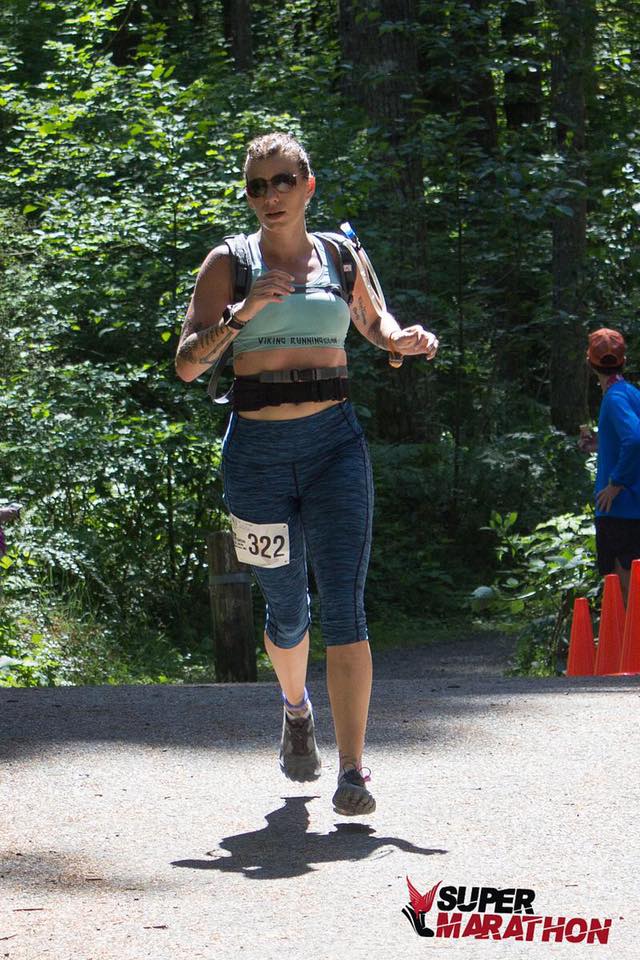
Flash forward ten years and now am certified to instruct several different group fitness workouts. I have successfully run my first full marathon and do mountain runs every year. I say mountain runs because when you’re running a 29K and it’s 2700 feet of elevation gain, it’s a mountain.

Oh, and I am a barefoot runner. I won’t do too many blog posts about that because we are few and far between. IF you have questions about barefoot running – holla’ at your girl!

This blog will be all bout my tips for being a successful trail runner. By successful I don’t mean winning every race. Being successful means, you know you can complete the race in the timeframe you set for yourself. It means you know you can complete the race without injury, hopefully. I mean, stuff happens. Hopefully my tips will help you find that confidence to run your first race or your 100th.

Design a site like this with WordPress.com
Get started