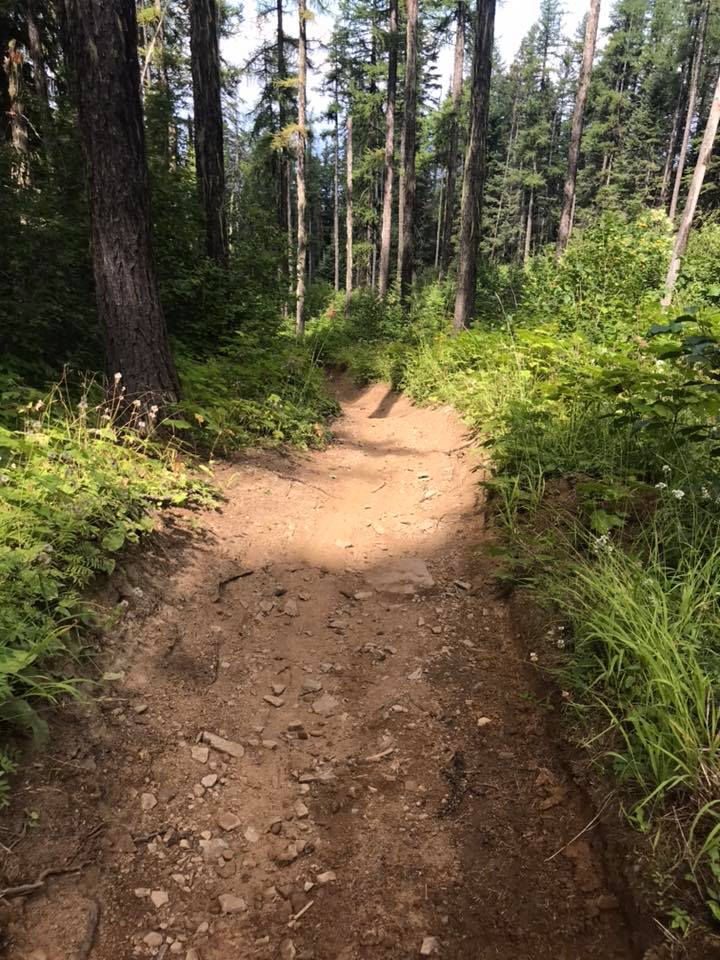
As a group fitness instructor, avid outdoors woman, and long-distance runner for over a decade, I have tried almost every trick in the book to be better, faster, and stronger. My last 29K race I shaved 3 minutes off my time. I know that may not sound like much, but it is when you’re on a trail and it’s a downpour, you’ve fallen on your tush, and you’re at the end of your wits.
This past summer, June 2019, I ran my favorite 29K trail run for the second year in a row. The year prior it drizzled a little and was slightly chilly on top of the mountain. I was not in the best shape of my life. Don’t get me wrong, I wasn’t in bad shape by any means, but it wasn’t the best I could be. I struggled on the up hills and went slower with my husband on the down hills because his knee was bothering him. We finished that year in 4:59. Now, keep in mind this is on a trail and has 2,700 feet (ish) of elevation gain.
So, my second year doing it I did it without my husband. He was off following his dreams at Basic Training for the Air Force. Yes, at age 36 he joined the Air Force and I couldn’t be more proud. I’m on the trail, it’s in the 50s and raining hard. I’m pushing as hard as I can, within reason. Falling is not one of my favorite things to do and I’m a little chicken about it. So, I go fast where I can and slow myself down when it gets too slick. I did end up falling in a nice pillowy mud puddle. It didn’t hurt anything but my ego and I kept going. I slammed my toe into a stump, cussed, and kept going. Even though the weather was far worse than the year before and I was on my own I shaved off time.
Now onto my point, training and what I did to make myself successful. One thing I really worked on for this race was speed and hills. I knew I struggled with hills from the years prior and wanted to greatly improve. So, I focused on hill training.
There are different ways you can go about this. Going outside and actually running hills is one. Or, if you’re like me and teach several fitness classes a week on top of your regular running routine, adding in even more training isn’t always feasible or advised. There is such a thing as over training. During the months I trained for the 2019 29K I was teaching 8-10 fitness classes per week. I was running 3-4 times per week and doing my own workouts in between. The reason I do my own workouts too is because I’m not always doing the workout with the classes I teach – it’s not my workout and I am and should be focused on them. Now the days that I was running it was only a couple miles. I ran at most 8 miles in one run before my race and my typical run was 3-4 miles. I didn’t have time to get a ton of mileage in.
I’m not of the mindset of being a runner means just running. I wholeheartedly believe cross training should be an important part of training, but I won’t digress too much. Back to the hill training. I really did not have time to add in running hills, stairs, or trails. I was able get to the gym 20 minutes earlier than my scheduled class and I would get on the dreaded, hateful, and horrible stair climber. Man, oh man I hate that thing, but it WORKED. I got to where I could run mountains, stairs, you name it and not be out of breath. For me that was huge. I also would add in hill sprints on an indoor spin bike, but those I make the entire class do. *insert evil grin*
Why hill sprints on an indoor spin bike work: legs, cardiovascular, and endurance. Plus, if you do them standing they work the ankles a little, not a bad thing to have strong for trail running. When you’re trying to sprint on a hill you’re pushing your legs as hard as you can while it’s heavy. You go into an anaerobic state. Anaerobic exercises involve quick bursts of energy and are performed at maximum effort for a short time. When our bodies go into this anaerobic state it helps build lean muscle and increases overall endurance. It’s why you see track stars do sprints as part of their training.
So now fast forward to the day of the race. It’s raining, cold, I’m having chronic pain that’s unrelated to running, and I’m determined to shave time off from the year prior. I start off strong and hit a wall at about mile six. That’s where the up hills start to take a toll. It’s not an out of breath, I’m dying type of wall that I’ve hit. It’s a I don’t want to fall on my tush because it’s getting slick. It’s my chronic pain is going to be the death of me. It’s a “why the heck am I doing this?”. But pushing through that wall I make it to mile 9 at the top of the mountain. It’s foggy but beautiful. The year prior I didn’t even go all the way to the top because it was starting to frost and I didn’t want my muscles to lock up. So this year I take a few minutes at the top taking pictures, taking my long sleeve back off because it’s soaked and pointless. That’s when I turn around and head back down. Now this mountain isn’t 100% up hill for the first half. It’s rolling with the last 3 miles as steep switchbacks. At this point I know I’m ahead of my time but I know how slick it is getting back down and that I’m not going to go as fast as I would like and I still shaved 3 minutes off my time.
Hill training, it’s horrible and I dread it every year. However, it is so necessary and I’m so grateful for it during my races. It also made my first marathon 3 weeks later a breeze.
So, if you have a gym membership, a desire to run a trail/mountain race, or are just a little bit crazy like me: get on that stair climber or go run some stairs and get on an indoor spin bike to do hill sprints. It will do wonders for your cardiovascular and legs. I only added in 10-20 minutes on the stairs each week and was only doing 2-3 spin classes. Plus, let’s be honest ladies both of those exercises are so good for the booty!
Keep your eyes peeled for my ankle training tips next week.
 Trail Running and Wellness